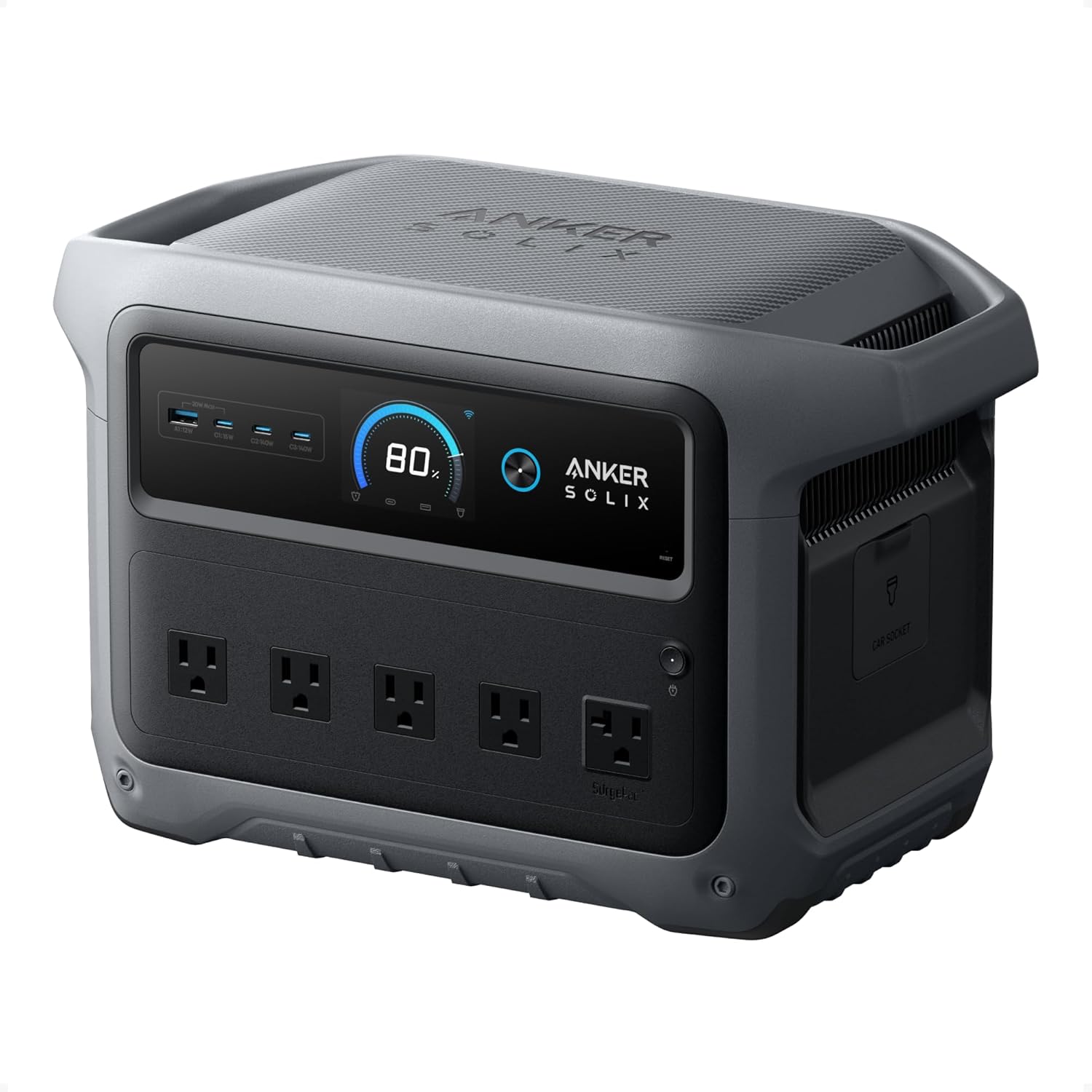
Introduction
Portable power stations have become essential equipment for camping, emergency backup, remote work, and off-grid living. Whether you need to keep devices charged during a power outage or run tools at a remote job site, a portable power station provides clean, quiet electricity without the noise and fumes of a gas generator.
This guide explains how power stations work, what features matter most, and how to choose the right unit for your needs. All information is based on manufacturer specifications, industry standards, and aggregated user feedback from multiple platforms.
Important note: We do not conduct independent laboratory testing. Our analysis is based on manufacturer specifications, reviews from established outdoor and tech publications, and user feedback.
---
Understanding Power Station Technology
How They Work
A portable power station is essentially a large rechargeable battery with built-in power conversion electronics. The main components are:
- Battery pack -- Stores electrical energy (measured in watt-hours, Wh)
- Inverter -- Converts DC battery power to AC mains power for running appliances
- Charge controller -- Manages charging from AC wall outlets, car chargers, or solar panels
- Battery Management System (BMS) -- Monitors cell voltage, temperature, and state of charge to ensure safe operation
- Output ports -- AC outlets, DC ports, USB-A, and USB-C for connecting devices
Key Specifications Explained
| Spec | What It Means | Why It Matters |
|------|---------------|----------------|
|
Capacity (Wh) | Total energy stored in the battery | Determines how long you can run devices. A 1000Wh unit can theoretically power a 100W device for 10 hours. |
|
Continuous Power (W) | Maximum power the inverter can supply indefinitely | Must exceed the wattage of the largest appliance you plan to run. |
|
Peak Power (W) | Short-term surge capacity (usually 2-3 seconds) | Important for devices with high startup surges like refrigerators and power tools. |
|
Cycle Life | Number of charge/discharge cycles before capacity degrades to 80% | Higher cycle life means longer useful lifespan. |
|
Charge Time | Time to fully charge from empty | Faster charging means less downtime. |
|
IP Rating | Ingress protection rating for dust and water | Higher ratings mean better durability for outdoor use. |
Battery Chemistry Comparison
| Chemistry | Energy Density | Cycle Life | Weight | Cost | Best For |
|-----------|---------------|------------|--------|------|----------|
|
LiFePO4 (LFP) | Lower | 2000-4000 cycles | Heavier | Higher | Long-term use, safety-critical applications |
|
NMC (Lithium-ion) | Higher | 500-800 cycles | Lighter | Lower | Portability, weight-sensitive applications |
|
Lead-Acid (AGM) | Lowest | 300-500 cycles | Heaviest | Lowest | Budget applications, infrequent use |
---
Types of Power Stations
By Capacity
Small (150-500Wh)
- Weight: 2-5 kg
- Best for: Charging phones, laptops, cameras, LED lights
- Typical price: $150-400
- Examples: Jackery Explorer 240, EcoFlow River 2
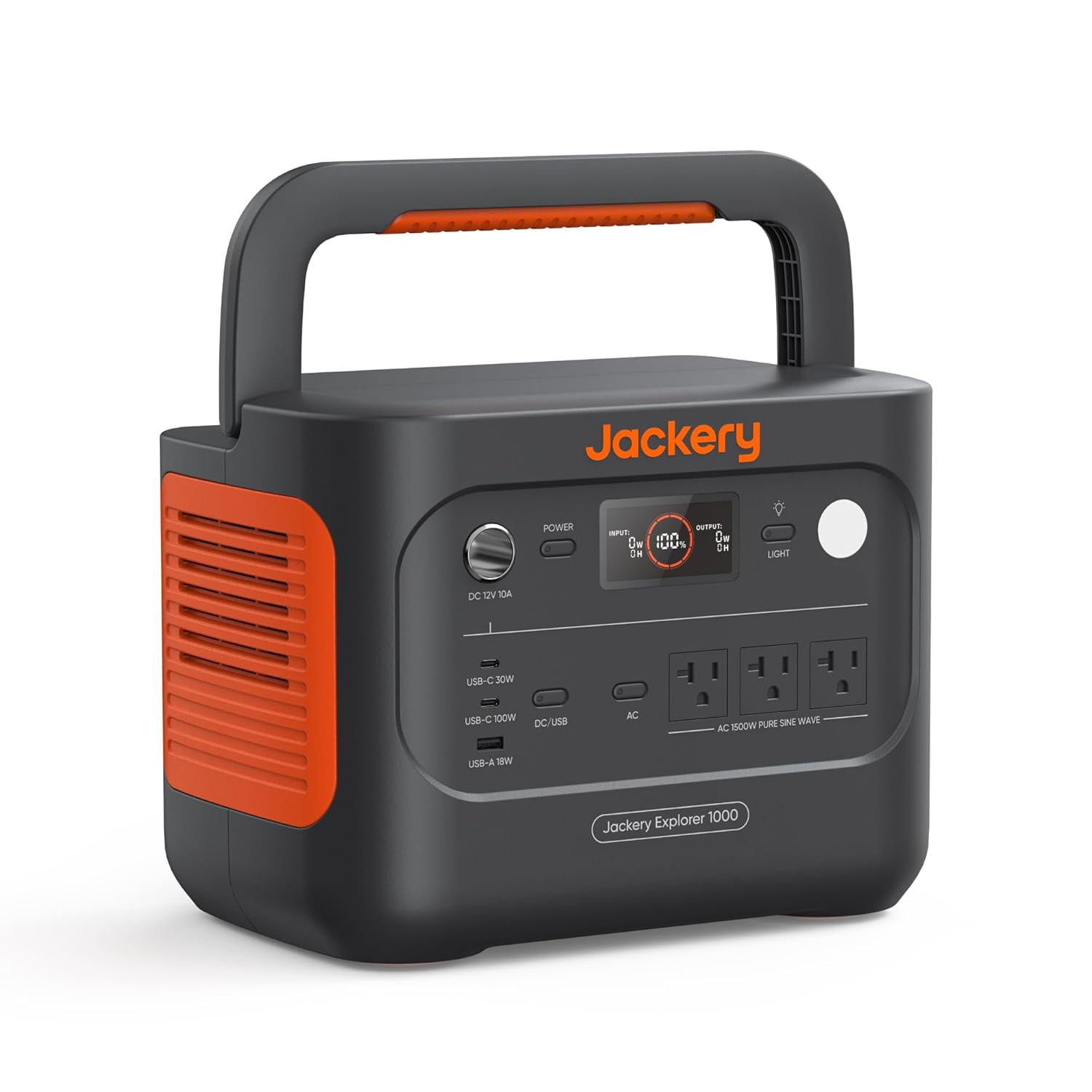
Medium (500-1500Wh)
- Weight: 5-15 kg
- Best for: Camping, powering small appliances, emergency backup for essentials
- Typical price: $400-1200
- Examples: Jackery Explorer 1000, EcoFlow Delta 2, Bluetti AC200P
Large (1500-3000+ Wh)
- Weight: 15-30+ kg
- Best for: Home backup, running refrigerators, power tools, extended off-grid use
- Typical price: $1200-3000+
- Examples: EcoFlow Delta Pro, Bluetti AC300, Anker PowerHouse 767
By Use Case
Camping and Outdoor
- Prioritize: Weight, portability, solar charging capability
- Look for: 300-1000Wh capacity, at least one USB-C PD port, solar input
Home Emergency Backup
- Prioritize: Capacity, continuous power output, fast charging
- Look for: 1000+ Wh capacity, 1500W+ continuous output, AC and solar charging
Remote Work / Professional
- Prioritize: Capacity, multiple output ports, quiet operation
- Look for: 500-1500Wh capacity, pure sine wave inverter, multiple AC outlets
---
What to Look For When Buying
1. Capacity vs. Your Needs
Calculate your energy needs before buying:
```
Runtime (hours) = Usable Capacity (Wh) ÷ Load (W)
```
Example: A 1000Wh power station running a 60W laptop = ~16 hours of runtime (accounting for inverter efficiency, realistically 12-14 hours).
2. Output Power
Check the continuous power rating, not just the peak rating. A unit advertised as "2000W" may only deliver 1000W continuously. The continuous rating is what matters for running appliances.
3. Charging Options
Look for units that support:
- AC wall charging -- Fastest method; some units support 800W+ input for sub-2-hour full charges
- Solar charging -- Essential for off-grid use; check the maximum solar input wattage and voltage range
- Car charging -- Useful for road trips; typically slower than AC
4. Inverter Type
Pure sine wave is essential for sensitive electronics (laptops, medical devices, audio equipment).
Modified sine wave is cheaper but can cause issues with some devices.
5. Expandability
Some power stations support external battery packs to increase capacity. This is useful if your needs may grow over time.
6. Safety Certifications
Look for:
- UL certification (UL 2054 or UL 2743) -- Indicates safety testing by Underwriters Laboratories
- FCC certification -- Required for sale in the US
- CE marking -- Required for sale in Europe
---
Common Mistakes to Avoid
1.
Buying based on peak power alone. Always check the continuous power rating. A unit with 2000W peak but only 1000W continuous will struggle with high-draw appliances.
2.
Ignoring usable capacity. Not all rated capacity is usable. A 1000Wh lead-acid unit may only provide 500-600Wh of usable energy due to depth of discharge limitations.
3.
Underestimating solar charging needs. Solar charging is slower than AC charging. A 200W solar panel in good conditions might take 5-8 hours to fully charge a 1000Wh unit.
4.
Not considering weight. A 2000Wh lead-acid unit can weigh 25+ kg. If you need portability, lithium-based units are significantly lighter.
5.
Forgetting about inverter efficiency. All inverters lose some energy as heat. Typical efficiency is 85-95%. Factor this into your runtime calculations.
---
Setup and Safety Guide
Initial Setup
1. Fully charge the unit before first use
2. Read the user manual for specific safety instructions
3. Place on a flat, stable surface with adequate ventilation
4. Keep away from heat sources and direct sunlight during use
Safe Usage
- Do not exceed the continuous power rating
- Do not use in wet conditions unless the unit has an appropriate IP rating
- Do not attempt to open or modify the battery pack
- Store in a cool, dry place when not in use
- Charge at least once every 3-6 months during storage to maintain battery health
Maintenance
- Keep vents clear of dust and debris
- Clean exterior with a damp cloth (do not use solvents)
- Check cables and connections periodically for damage
- Replace filters (if applicable) according to manufacturer guidelines
---
Frequently Asked Questions
Q: How long will a power station last?
A: Battery lifespan depends on chemistry and usage. LiFePO4 batteries typically last 2000-4000 cycles (8-10+ years of regular use). NMC lithium-ion batteries last 500-800 cycles (3-5 years). Lead-acid batteries last 300-500 cycles (2-3 years).
Q: Can I run a refrigerator on a power station?
A: Yes, if the power station's continuous wattage exceeds the refrigerator's running wattage (typically 100-200W for a standard fridge). However, the startup surge can be 2-3x the running wattage, so check the peak power rating as well.
Q: Is solar charging worth it?
A: Solar charging is valuable for off-grid situations where AC power is unavailable. For home backup use, AC charging is faster and more practical. A 200W solar panel can typically provide 100-150W of actual charging power depending on conditions.
Q: Can I use a power station while it is charging?
A: Most modern power stations support pass-through charging (using the unit while it charges). However, this may increase charge time and generate more heat.
Q: What is the difference between a power station and a gas generator?
A: Power stations are battery-powered, silent, emission-free, and safe for indoor use. Gas generators are louder, produce exhaust fumes, and require fuel, but can provide more power for longer periods. Power stations are better for electronics and short-term backup; gas generators are better for high-power, long-duration needs.